
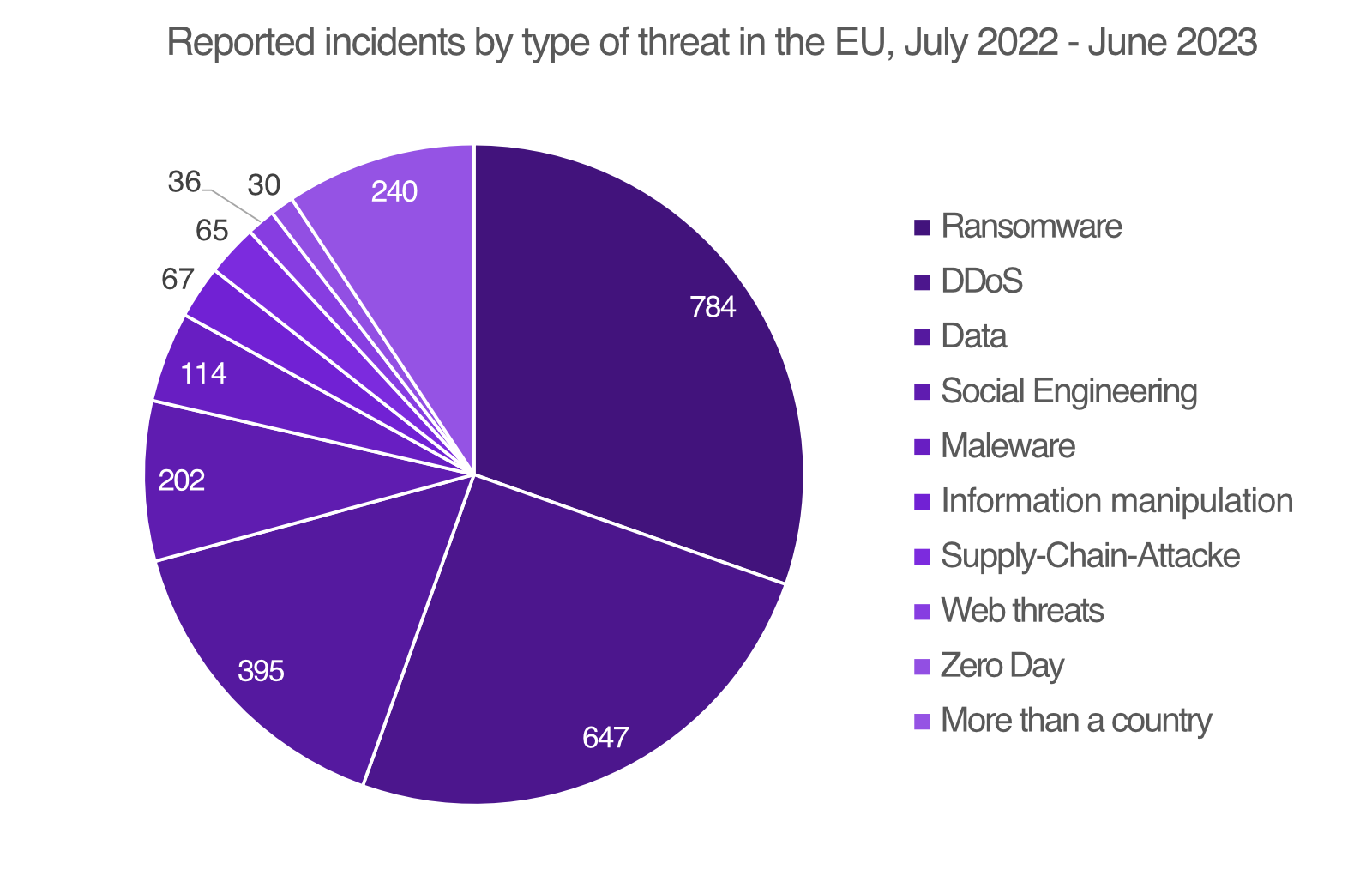
The number of cyberattacks has been developing dynamically for years. For the reporting period of 2023, the European Union analyzed 2,580 reported incidents in the member states; the dark figure is considerably larger. Over 70% of all reported incidents are malware, denial of service (DoS), and data attacks, regardless of the method used for intrusion, such as phishing emails.
The impact of cyberattacks is no longer an abstract risk for companies. The high potential damages and the new regulation with drastic EU-wide fines are a call to action.
Ransom demands
In 2023, for the first time, over €1 billion in cryptocurrency was transferred worldwide to malware attackers as ransom.
Network attacks (DoS attacks)
In the 4th quarter of 2023, the duration of DoS attacks worldwide increased to an average of 121 minutes, and the associated average exposure costs rose to over €675T per attack.
Companies are often exposed to DoS attacks multiple times.
Data breach due to cyberattacks
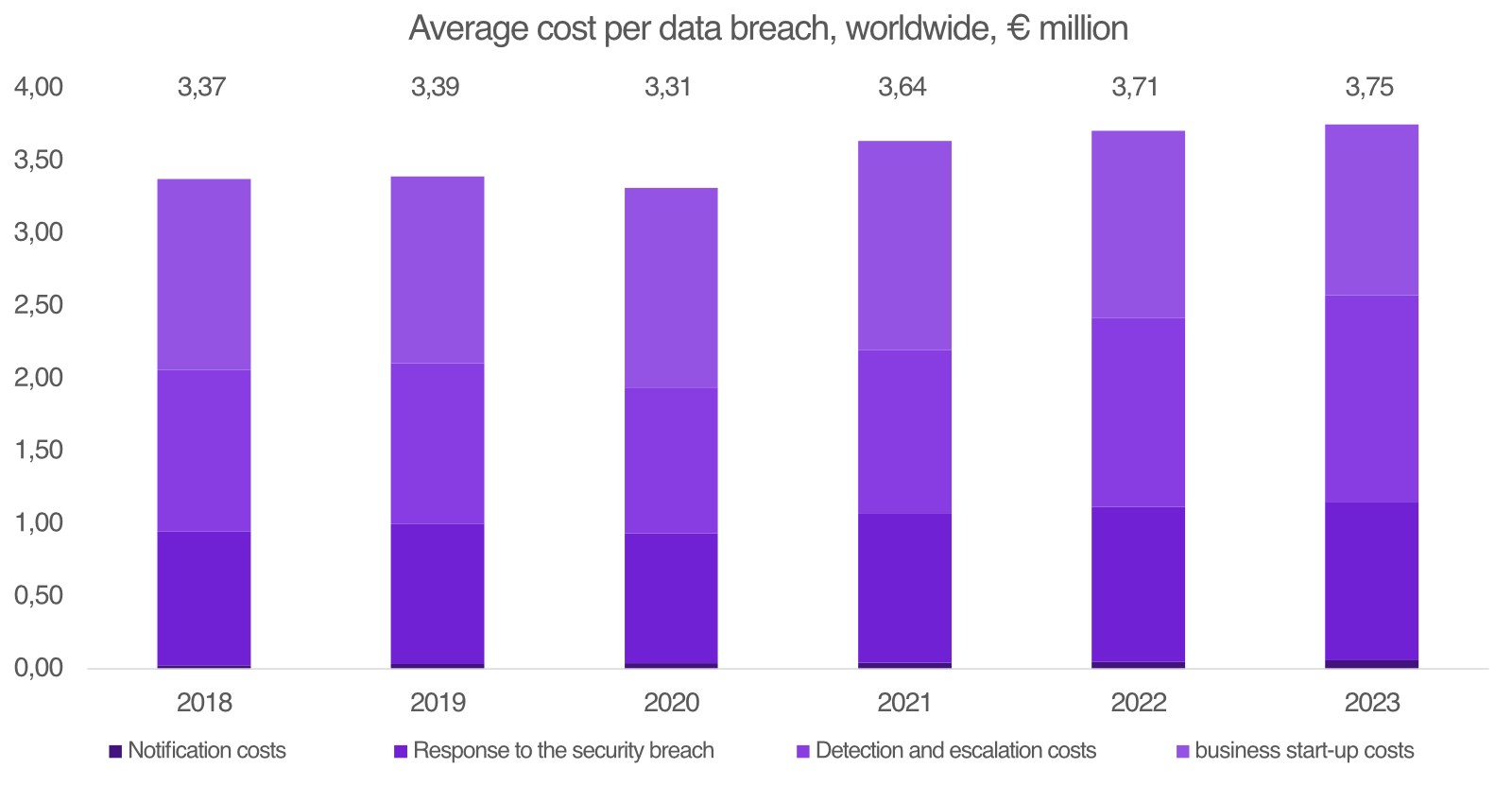
In 2023, the average cost per data breach worldwide exceeded the US$4 million mark (€3.75 million) for the first time. In the case of an attack without a ransom demand, it took an average of more than 200 days for it to be discovered by the affected company. IT security has already become an economic factor for companies today.
Against the backdrop of omnipresent threats, cyberattacks have risen to become the biggest risk for companies, ahead of human error and operational disruptions. Thus, achieving and expanding information security is already an essential building block for corporate survival.
The market for cyber insurance for companies is growing strongly, measured by gross insurance premiums in Germany, by 29%. An effective means of minimizing the additional costs of an incident. While the cyber insurance business has been less profitable for insurance companies in recent years, the prerequisites for concluding a policy, premium levels, and coverage have been adjusted to the threat landscape and realized claims. Insurance coverage only covers a portion of the damages incurred in regulated incidents.
The biggest lever for reducing damage costs is the development and expansion of a company’s IT and cyber security capabilities. Studies show that with a knowledgeable response team and swift, state-of-the-art incident support, damage costs can be reduced by millions.
Our experienced interim CISOs and IT security managers support you with
- Risk assessment and vulnerability analysis
- Development of guidelines
- Building the security organization
- Creation and implementation of an IT security concept
- Support with acute incidents (immediate measures)
- Continuous improvement of information security (employee training)
Conclusion:
IT and cyber security have long since become an economic factor for companies. The continuous increase in incidents must be countered by robust, modern defense capabilities on the company side. Most companies do not have up-to-date IT security. Rapid development is required.
PEAK.p has a pool of experienced, crisis-tested, and vetted IT and cyber security experts worldwide. They work for your company on an interim basis to establish, further develop, and defend the necessary information security together.